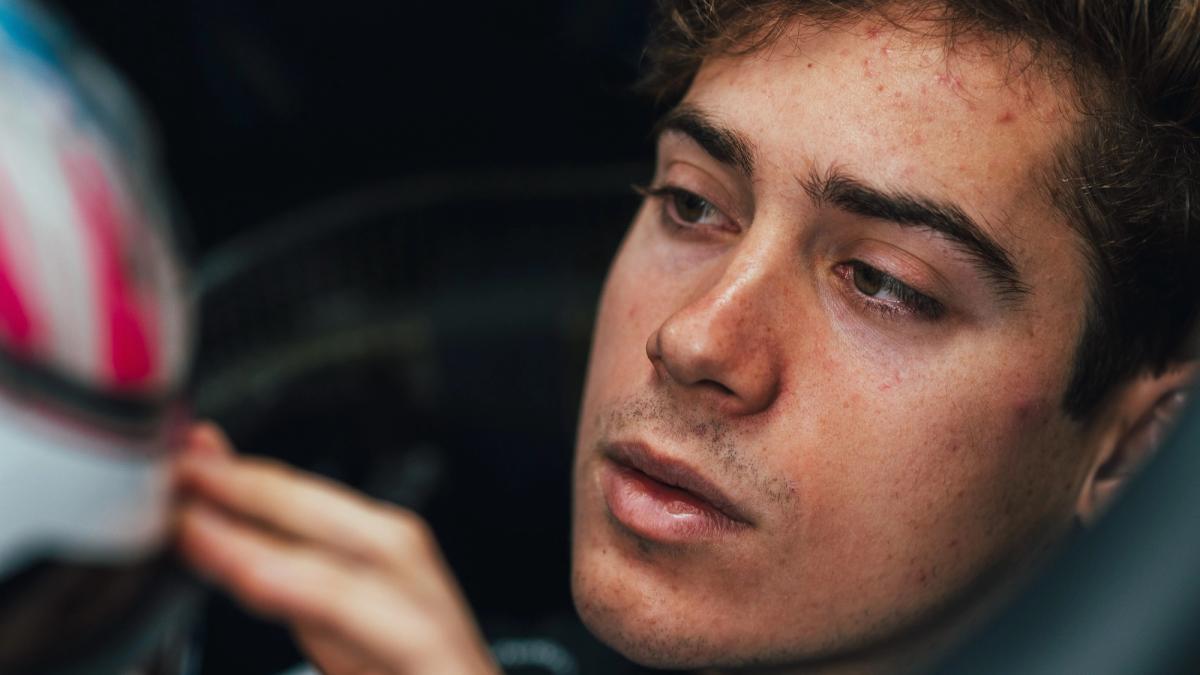
Colapinto's Post-Qualifying Challenge: "Must Develop Quickly" at the Australian GP
The world of motorsport is a relentless proving ground, where raw talent meets unyielding pressure. For emerging stars, every Grand Prix weekend is a crucible, and the recent **colapinto gp austrália** proved to be no exception for Franco Colapinto. From the exhilarating highs of a miracle save to the sober reflections on qualifying performance and a summons to the stewards, Colapinto's Melbourne experience encapsulates the volatile journey of a driver striving to reach the pinnacle of racing. His candid admission post-qualifying, "We must develop quickly," resonates as a powerful statement, highlighting the cutthroat demands of a sport where stagnation is not an option.
The Australian Grand Prix is a unique challenge, with its fast, flowing Albert Park circuit often catching even seasoned drivers off guard. For a young driver like Colapinto, navigating its complexities while battling for crucial championship points requires not just skill but an acute ability to adapt and learn on the fly. This article delves into the various facets of Colapinto's challenging yet formative weekend in Australia, exploring his moments of brilliance, the areas demanding swift improvement, and the broader implications for his promising career.
The Pressure Cooker of Qualifying: A Call for Rapid Development
Qualifying sessions in motorsport are often described as the most intense part of a race weekend. It's a sprint against the clock, where fractions of a second can dictate starting positions and, ultimately, a driver's entire race strategy. For Franco Colapinto at the **colapinto gp austrália**, the qualifying session appears to have been a source of significant reflection. While the specific details of his performance might not have met his own high standards, his immediate call for "quick development" speaks volumes about his self-awareness and ambition.
Qualifying on a street circuit like Albert Park is particularly challenging. The track evolves rapidly, rubbering in with each passing session, and the margins for error are razor-thin due to unforgiving walls. Drivers must find a delicate balance between aggression and precision, extracting every ounce of performance from their machinery without overstepping the limit. A car setup that isn't perfectly dialed in, or a driver who hasn't fully acclimatized to the circuit's nuances, can quickly find themselves down the pecking order.
Colapinto's statement suggests an understanding that consistent front-running qualifying pace is non-negotiable for success in competitive single-seater categories. For a young driver aiming for Formula 1, every session is an audition. "Developing quickly" in this context involves a multi-faceted approach: deeper technical understanding of car setup, more refined driving lines, enhanced mental focus to string together the perfect lap, and the ability to extract maximum performance from new tire compounds. It's about translating raw speed into consistent, repeatable excellence, a trait that separates champions from contenders. His readiness to acknowledge areas for improvement is a sign of maturity, a quality as valuable as outright pace in the high-stakes world of professional racing.
A Near Miss and a Display of Instinct: The Start Line Drama
Amidst the challenges, the **colapinto gp austrália** also provided a stunning testament to Franco Colapinto's exceptional driving instincts and reaction skills. In a heart-stopping moment at the start line, Colapinto demonstrated why he is considered one of motorsport's most exciting young talents. Facing what looked like an inevitable multi-car pile-up, he executed a breathtaking maneuver, squeezing his car through an almost impossibly "tiny gap" between Liam Lawson's stationary or slow-moving vehicle and the unforgiving circuit wall.
This wasn't just a lucky escape; it was a masterful display of spatial awareness, lightning-fast decision-making, and incredible car control under immense pressure. In the chaotic milliseconds of a race start, where drivers are battling for position and visibility can be compromised, avoiding a collision of that magnitude requires a combination of foresight and reflexes that few possess. A lesser driver might have panicked, braked too hard, or veered into another car, ending their race before it had truly begun and potentially causing a significant incident for others.
Colapinto's ability to thread the needle, avoiding both Lawson's car and the concrete barrier, not only saved his own race but also prevented what could have been a much larger and more dangerous incident. Such moments are often etched into the memory of fans and team principals alike, showcasing a driver's innate ability to perform under the most extreme conditions. It's these flashes of brilliance, where instinct takes over and averts disaster, that truly underscore a driver's potential and mental fortitude. This "miracle maneuver" undoubtedly solidified his reputation for resilience and raw talent on track. You can read more about this remarkable incident here:
Colapinto's Miracle Maneuver: Avoiding Australian GP Crash.
Facing the Stewards: Navigating Post-Race Scrutiny
Another significant aspect of Colapinto's Australian GP weekend was his summons by the race stewards. In the high-octane environment of professional racing, an appearance before the stewards is a common, though often unwelcome, occurrence for drivers across all categories. While the specific details surrounding Colapinto's summons at the **colapinto gp austrália** remain somewhat generalized in the initial context, it's safe to assume it pertained to an on-track incident or a perceived breach of regulations.
Race stewards are the arbiters of fair play and safety in motorsport. Their role involves meticulously reviewing incidents – from minor track limit infringements to major collisions – using telemetry data, onboard camera footage, and witness accounts. Common reasons for a driver to be summoned include unsafe rejoins onto the track, impeding another driver during qualifying or the race, exceeding track limits to gain an unfair advantage, or contact with another competitor. The reference hinting at "Lewis..." suggests a potential interaction with another high-profile driver, which often brings added scrutiny.
For a young driver like Colapinto, navigating these post-race investigations is a crucial part of their development. It's a learning experience in racecraft, understanding the nuances of the rulebook, and presenting one's case effectively. Each summons, regardless of the outcome, offers valuable lessons in race etiquette, spatial awareness, and the consequences of aggressive driving. It forces drivers to reflect on their actions, understand the perspectives of other competitors and the officials, and ultimately refine their approach to competitive racing. This process of accountability is fundamental to shaping a well-rounded and disciplined driver, one who can push the limits while adhering to the stringent regulations that govern the sport. Further context on this aspect of his weekend can be found here:
Franco Colapinto Summoned by Stewards at Australian GP.
Beyond Melbourne: The Road Ahead for Franco Colapinto
The Australian Grand Prix served as a microcosm of the challenges and opportunities that lie before Franco Colapinto. His weekend encapsulated the dual nature of high-level motorsport: moments of undeniable brilliance juxtaposed with areas demanding swift and focused improvement. The "must develop quickly" mantra he articulated is not merely a statement of intent but a strategic imperative for a driver with his sights set on the upper echelons of the sport.
Developing quickly for a professional racing driver involves an intensive, continuous process. It's about rigorous post-race debriefs, dissecting every lap with engineers to understand setup changes, tire degradation, and driving lines. It means countless hours in the simulator, perfecting specific corners and practicing race scenarios. Physical conditioning is paramount, ensuring peak performance throughout gruelling races, while mental training enhances focus, resilience, and decision-making under pressure. Furthermore, it encompasses a deep dive into data analysis, comparing one's performance against teammates and competitors to identify specific areas for gain.
For Colapinto, integrating the lessons from the **colapinto gp austrália** – leveraging his incredible instinct as shown in the start-line save, while simultaneously refining his qualifying consistency and understanding race regulations to avoid steward scrutiny – will be key. His raw talent is evident; his future success hinges on his ability to harness that talent with discipline, continuous learning, and an unwavering commitment to improvement. The journey to the top is paved with such formative weekends, and Colapinto's response to these challenges will define his trajectory in the fiercely competitive world of single-seater racing.
The Australian GP was more than just another race for Franco Colapinto; it was a critical learning experience. It highlighted his innate talent and rapid reflexes, qualities that separate good drivers from great ones. Yet, it also underscored the constant need for refinement, consistency, and a deep understanding of every aspect of the sport, from technical setup to regulatory compliance. His resolve to "develop quickly" is a promising sign, reflecting the mindset required to climb the motorsport ladder. As Colapinto moves forward, armed with the insights gained from Melbourne, the racing world will be watching closely to see how this determined young driver translates his potential into sustained success.